Is an electric car cheaper to run than petrol or diesel?
In most cases, yes. An electric car is cheaper to drive per 100 km than a comparable petrol or diesel car, particularly when it is charged at home.
In most cases, yes. An electric car is cheaper to drive per 100 km than a comparable petrol or diesel car, particularly when it is charged at home.
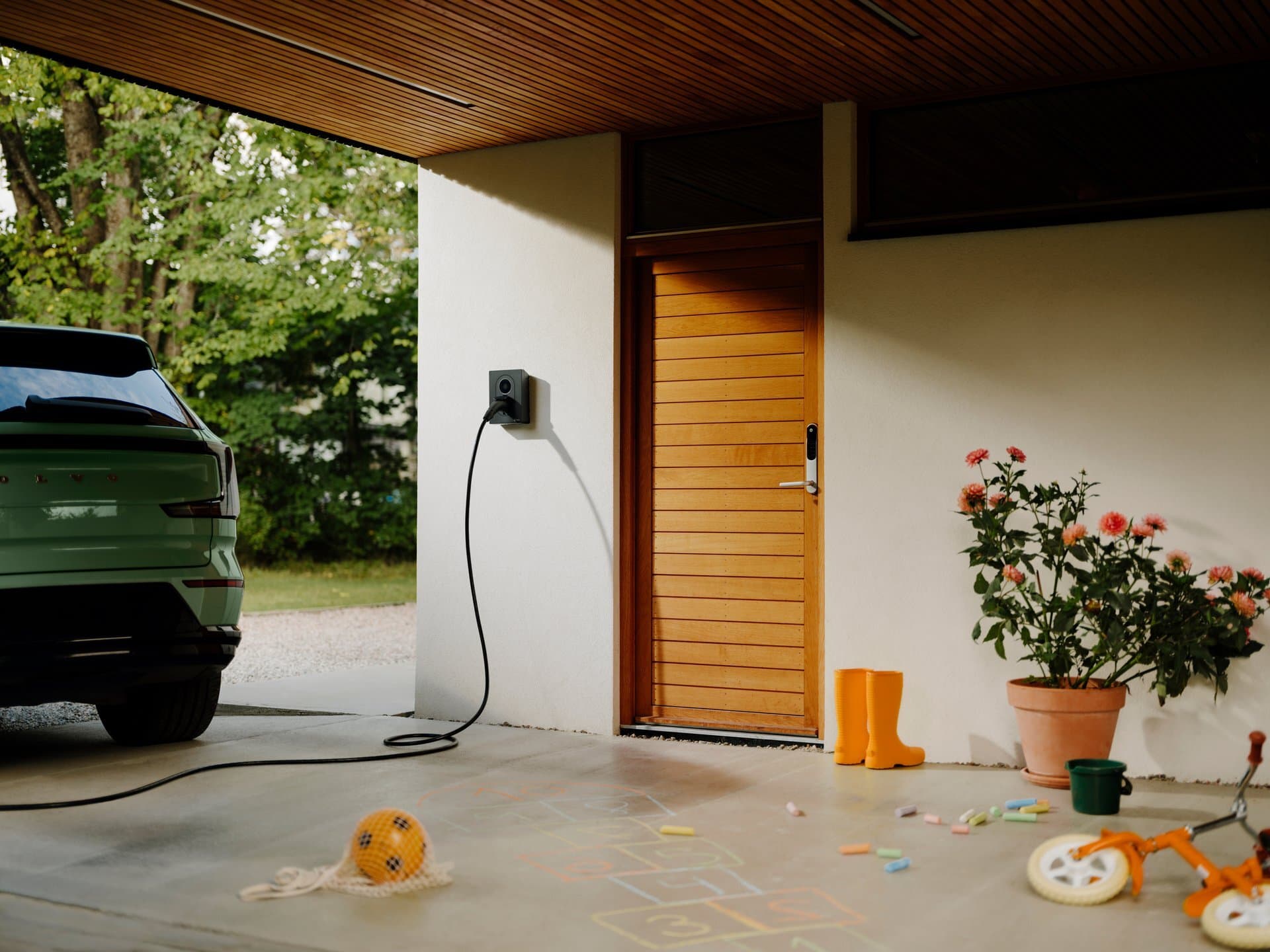
The exact cost depends on where you live, the price you pay for electricity and fuel, the efficiency of your car, and whether you charge at home or in public. But the overall pattern is clear: home charging generally gives electric drivers the lowest energy cost per kilometre.
The Zaptec Index makes this easy to compare. It tracks how far the same amount of money takes you with home charging, public charging, petrol and diesel across Europe.
Explore today's prices in the Zaptec Index.
For many drivers, an electric car is the lowest-cost way to travel 100 km. This is especially true when charging at home.
A petrol or diesel car needs several litres of fuel to cover 100 km. An electric car uses electricity instead, and the cost of that electricity is often lower per kilometre, particularly when it comes from a home charger rather than a public charging network.
That does not mean every EV journey is always cheaper. Public charging prices vary, and rapid charging can cost considerably more than charging at home. The best answer is therefore not a fixed number. It is a current, local comparison.
That is what Zaptec Index is designed to provide.
Usually, yes. A home-charged electric car will often cost less per 100 km than a comparable diesel car.
Diesel cars are often more fuel-efficient than comparable petrol cars. This means diesel can be the lower-cost combustion option when comparing fuel spend alone. But a modern EV charged at home will typically travel further for the same amount of money.
The difference becomes smaller when an EV is mainly charged in public. Public AC and DC charging can be more expensive than home electricity, depending on the charging operator, tariff, location, charging speed and time of day.
For someone deciding between an EV and a diesel car, the key question is therefore simple:
Will you be able to charge regularly at home, at work or at another lower-cost destination charger?
If the answer is yes, an EV will usually have a meaningful everyday running-cost advantage.
In many markets, a home-charged EV is cheaper to run per 100 km than a comparable petrol car.
Petrol prices can fluctuate significantly, as can electricity prices. But the comparison is still useful because it starts with the same question: how much energy does each vehicle need to travel 100 km?
Zaptec Index uses representative consumption figures to make the comparison consistent:
These figures do not predict the exact cost of every driver’s journey. Your actual consumption will vary with weather, road conditions, speed, load, driving style and vehicle specification. They do, however, provide a clear like-for-like benchmark for comparing electric, petrol and diesel driving costs.
Yes, in most cases home charging is cheaper than public charging.
Charging at home usually gives drivers access to lower electricity prices than public charging networks. Public charging providers must cover the cost of installing, operating and maintaining chargers, as well as providing convenient access in locations where drivers need them.
Public charging remains essential. It enables longer journeys, supports drivers without access to home charging and helps businesses electrify their fleets. But for everyday charging, home charging is generally the most cost-effective option.
For first-time EV buyers, this is an important part of the decision. The ability to charge where you live can make a substantial difference to the cost of driving an electric car over time.
The cost of driving 100 km depends on two things:
Zaptec Index combines these two factors to show how far the same amount of money takes you. This makes it easier to compare different energy types without getting lost in separate electricity, fuel and consumption figures.
Example: United Kingdom
In the United Kingdom, this benchmark shows how far £10 will take a representative vehicle at current tracked prices. With home charging, a VW ID.3 Pro can travel around 180 miles for £10. Using public AC and DC charging, the same vehicle can travel approximately 69 miles for £10.
By comparison, £10 of petrol in a VW Golf 1.5 TSI will take you around 78 miles, while £10 of diesel in a VW Golf 2.0 TDI will take you approximately 83 miles.
For a global like-for-like comparison, this equates to an approximate energy cost per 100 km of £3.45 for home charging, £9.01 for public AC and DC charging, £7.97 for petrol, and £7.49 for diesel.
The example illustrates two important points. First, home charging delivers the lowest cost per 100 km in this comparison. Second, depending on the market and current prices, public charging can cost more per 100 km than petrol or diesel.
See the latest comparison for your market in the Zaptec Index.
No comparison can perfectly reflect every driver’s bill. Your own cost per 100 km may differ because of:
This is why current, country-specific data is more useful than a static claim that an EV is always cheaper.
The Zaptec Index compares the cost of driving with home charging, public AC and DC charging, petrol and diesel in 17 European markets.
The Index relies exclusively on publicly available data, including official statistical datasets, government and regulator feeds, central-bank exchange rates and public charging operator sources. Sources behind paywalls are not included. This approach is intended to make the Index transparent and reproducible.
Public charging prices are representative benchmarks rather than a promise of the exact price every driver will pay. Actual costs can vary by provider, location, subscription, time of use, charging speed and applicable taxes.
An electric car is usually cheaper to run than a comparable petrol or diesel car when you charge at home.
If you rely mainly on public charging, the answer becomes more dependent on local charging prices. Public charging can reduce the cost advantage of an EV, and in some cases can cost more per 100 km than petrol or diesel.
The best way to compare is to look at the latest prices in your market. The Zaptec Index shows how far the same amount of money takes you with home charging, public charging, petrol and diesel, so you can make a clearer decision based on current data.
Is an electric car cheaper to run than a diesel car?
In many cases, yes. A home-charged EV is usually cheaper per 100 km than a comparable diesel car. The gap can be smaller if you rely mostly on public charging.
Is an electric car cheaper to run than a petrol car?
In many markets, yes. Charging an EV at home often costs less per 100 km than driving a comparable petrol car. Check the Zaptec Index for the latest comparison in your market.
Is home charging cheaper than public charging?
Usually, yes. Home charging is generally less expensive than public AC or DC charging, particularly rapid charging.
How much does it cost to drive 100 km in an electric car?
It depends on the car’s energy consumption and the electricity price you pay. Lower home-electricity prices and a more efficient EV reduce the cost per 100 km. Zaptec Index provides current country-level benchmarks.
Is public charging always more expensive than petrol or diesel?
No. It depends on the country, charging operator, payment plan, vehicle efficiency and current fuel prices.
Where can I compare EV, petrol and diesel driving costs?
Zaptec Index compares how far the same amount of money takes you with home charging, public charging, petrol and diesel across European markets.