When your EV charger becomes critical infrastructure, the supply chain becomes a geopolitical question
By David Froli Stangeland, Chief Supply Chain Officer at Zaptec.
By David Froli Stangeland, Chief Supply Chain Officer at Zaptec.
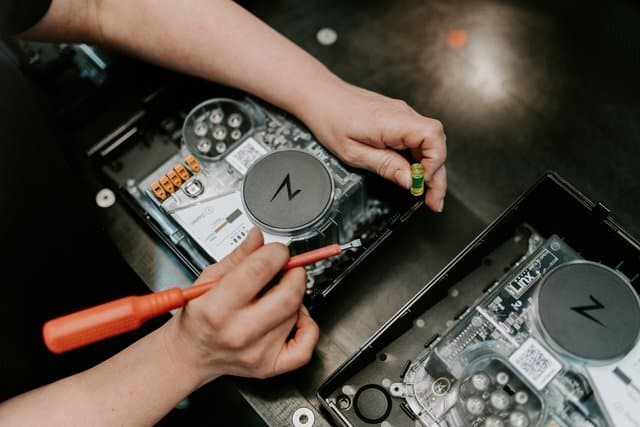
What are we actually willing to pay for "Made in Norway" or "Made in Europe"? Not as a feel-good label, but as a geopolitical strategy. Because right now, the price point for critical energy infrastructure is being benchmarked and dictated by foreign actors with unclear motives or by European brands that own nothing but a logo and a purchase order.
Most days in this industry, the conversation is about price. Who can deliver the cheapest unit? Which procurement deal shaves off a few more per cent? I understand that conversation. I take part in it. But I’m increasingly convinced it misses the point of what the EV charger is becoming part of.
In May 2025, Green Power Denmark discovered unexplained electronic components in circuit boards imported for the country's energy supply infrastructure. The components were found during a routine inspection and had not been included in any product documentation. As their technical director put it, these were boards “supposed to be part of components for the energy supply” – but nobody could say what the extra parts actually did, or whether they were intentional or accidental. [1]
Around the same time, US experts who strip down grid equipment reported finding undocumented communication devices, including cellular radios, in Chinese-made and manufactured solar inverters and batteries. Because these devices were not disclosed in any documentation, they were labelled “rogue”: additional channels that could, in theory, allow remote access around firewalls. [2] The European Solar Manufacturing Council (ESMC) warned that with over 200 GW of Europe’s solar capacity relying on such inverters, more than 200 nuclear power plants in equivalent output, the cybersecurity risk is systemic. [3]
Most of these findings will probably never turn into a real incident. But they illustrate something important: when energy infrastructure becomes digital, connected and remotely controllable, hidden functionality and undocumented components are no longer just a technical curiosity. They become a question of trust and control.
Now consider the EV charger on your wall.
A few years ago, a charger was a relatively simple device. It drew power from the grid and delivered it to your car. One direction. Even with sophisticated features like Zaptec’s patented phase balancing, the fundamental logic was the same: grid to car.
That is not what it will be tomorrow.
With vehicle-to-grid (V2G) technology, the charger becomes a two-way gateway. Your car battery can store surplus energy when it is cheap or abundant and feed it back into the grid when the grid is stressed. The charger is the connection point between the car, the battery, the building and the grid. It is where renewable energy, by nature intermittent, meets storage. It is where supply security stops being abstract and becomes physical.
Zaptec’s own Zaptec Go 2 is built with bidirectional capabilities because we believe this is where the system is heading, faster than most people realise. (Although not fast enough for some…)
So, when our industry keeps talking only about unit price, I think we are having the wrong conversation at the wrong time. The EV charger is on its way to becoming one of the most important nodes in Europe’s future energy system. Not the most visible. But possibly the most underestimated.
Which makes the next question urgent: who actually controls the production processes and the components inside it? Is “Made in Norway” or “Made in Europe” more than a marketing slogan?
A single Zaptec charger contains roughly 200 different components. About half are what I would call custom parts: components specifically chosen or designed for a particular function. Relays, displays, sockets, input connectors, plastics. The other half are bread-and-butter components. Capacitors, resistors, and small parts that are bought in the millions by our production partners.
Most of these components come from Asia. That is a fact of the industry, not a secret. And the price gap explains why.
We recently benchmarked a component, with the option of either a non-Chinese or a Chinese version. At comparable volumes, the non-Chinese option was almost twice the price. China is, quite simply, far ahead of the rest of the world when it comes to large-scale production of microelectronics.
Scale that kind of gap across hundreds of components, and the maths gets problematic fast. If you insist on only using more expensive alternatives, you do not end up with a slightly more costly charger. You risk ending up with a product that is no longer competitive at all. Most customers will choose alternatives that offer similar functionality at a lower price, even if they genuinely care about principled sourcing.
So, the market does what markets do. It optimises for cost. And the charger, this increasingly critical piece of Europe’s energy infrastructure, gets manufactured from wherever the price is lowest.
The question is not whether we should trade or cooperate with Asia. We should. The question is what we lose when cost becomes the only driver.
There is nothing inherently wrong with global supply chains. The issue is what disappears from view when cost is the only thing you measure.
You lose the ability to really know what is in your product and how it is made.
At Zaptec, every new supplier undergoes a thorough approval process covering risk management systems, cybersecurity policies, conflict mineral sourcing, and labour conditions. They sign our Code of Conduct. We monitor and follow up. And when our internal controls or whistleblowing channels uncover conflicts of interest or problematic ties, we investigate and act, up to and including ending relationships or employment. Not because it looks good in a report, but because governance only matters if it has consequences.
That kind of governance requires proximity, institutional frameworks and direct relationships with your supply chain. It also requires an industry that collectively raises the bar. When we disassemble some ultra-low-cost competitors, the shortcuts we find are simply alarming. On paper, the products can still be compliant, but is “the bare minimum we can get away with” really the benchmark we want for critical infrastructure? Is that really the price we are willing to pay for “cheap”?
You also lose competence. And this may be the most important point.
Manufacturing is not just a cost line. It is knowledge. Engineers who understand tolerances. Sourcing specialists who understand material flows. Quality teams that know how a relay performs under extreme tension.
When Europe stops making things, we do not just lose factories; we lose the ability to make things. We lose the feedback loops between design, production and field experience. And if everyone eventually moves production out of Europe, what is left?
Europe is now channelling enormous resources into defence. EU member states’ defence expenditure reached €343 billion in 2024, rising for the tenth consecutive year, and is expected to reach €381 billion in 2025. [4] The ReArm Europe plan, presented in March 2025, paves the way for up to €800 billion of additional defence spending, including a €150 billion EU-backed loan instrument called SAFE. [5] The reasoning is widely shared: after decades of depending on American protection, Europe must stand more on its own feet.
I think that reasoning is correct. But I also think it is incomplete.
Energy infrastructure is security, too. The charger on the wall, the inverter on the roof, the battery in the basement: these are the future grid. And the grid is as strategic as anything military. A country that cannot keep its lights on, balance its grid, or protect its energy system from cyberattack is a country with a very narrow definition of defence.
Yet we have not treated energy infrastructure manufacturing with anything close to the seriousness we now bring to defence. We still largely treat it as a commodity market, governed by “lowest price wins.”
Norway has already proved how powerful well-designed incentives can be.
Nine out of ten passenger cars sold in Norway were all-electric in 2024. [6] This did not happen because EVs suddenly became cheaper than petrol cars on their own. It happened because the government deliberately and consistently promoted EVs, starting as far back as 1990, long before the rest of the world. The majority of political parties backed the principle that it should always be economically beneficial to choose zero and lowemission cars over highemission cars. [7]
In other words: Norway did not wait for the market to solve it. It decided that the transition mattered enough to justify longterm, predictable incentives. It made EVs competitive through policy first, and cost followed.
We could do something similar for European component manufacturing and energy infrastructure.
I would like to see incentives that make “Made in Europe”, or at least “Controlled in Europe”, a rational business decision rather than a purely idealistic one.
That could mean tax incentives or reduced employer contributions for factories producing key components in Europe. It could mean EU-level funding and guarantees for new semiconductor and power electronics capacity. It could mean green public procurement rules that weigh security of supply and transparency in the bill of materials alongside price.
The exact mix is up for debate. But the principle should not be.
We cannot realistically, in the near term, replace every Asian component in an EV charger or a solar inverter with a European one. Nor should we want to cut ourselves off from the world’s largest manufacturing ecosystems. But we can decide that a meaningful share of the value chain should be under European jurisdiction, built on European engineering competence, and transparent enough that we know what is in the boxes we bolt to our walls.
For a company like Zaptec, that would not be a free gift. It would still require us to compete on design, quality and cost. But it would at least make it possible to argue for European-made or European-controlled components in a way that does not automatically price us out of the market.
The EV charger is no longer a consumer accessory. A gadget. It is a gateway between your car and the continent’s energy system. A gateway to the grid. And the industry building it is, right now, having the wrong conversation.
We are talking about ‘unit price’. We should be talking about what we are building, who controls it, and whether Europe is willing to pay, wisely and strategically, for sovereignty over its own critical infrastructure.
[1] Reuters, "Unexplained components found in Denmark's energy equipment imports," 21 May 2025. https://www.reuters.com/sustainability/boards-policy-regulation/unexplained-components-found-denmarks-energy-equipment-imports-industry-group-2025-05-21/
[2] Utility Dive / Reuters, "Rogue communication devices found on Chinese-made solar power inverters," 14 May 2025. https://www.utilitydive.com/news/rogue-communication-devices-found-on-chinese-made-solar-power-inverters/748242/
[3] PV Tech, "Rogue devices found in Chinese solar inverters raises cybersecurity alarm in Europe," 2025. https://www.pv-tech.org/rogue-devices-found-in-chinese-solar-inverters-raises-cybersecurity-alarm-in-europe/
[4] Council of the European Union, "Defence in numbers," 2025. https://www.consilium.europa.eu/en/policies/defence-numbers/
[5] Council of the European Union, "European defence expenditure," 2025. https://www.consilium.europa.eu/en/policies/european-defence-expenditure/
[6] World Resources Institute, "Countries adopting electric vehicles fastest," 2025. https://www.wri.org/insights/countries-adopting-electric-vehicles-fastest
[7] Norsk elbilforening, "Norwegian EV Policy," 2025. https://elbil.no/english/norwegian-ev-policy/