• Charging solutions
    • Home charging
      • Zaptec Go
      • Zaptec Go 2
    • Commercial & shared charging
      • Zaptec Pro
    • Load balancing
    • Zaptec App
    • Zaptec Portal
    • Accessories
  • For partners & installers
    • Documents & manuals
    • Partner webshop
    • Partner marketing material
    • Existing partners & installers
    • Training courses
    • Become a partner
  • Info Hub
    • Tips and tricks
    • Case studies
    • Industry news
    • Inside Zaptec
  • Need help?
    • Documents & manuals
    • Help Centre
    • Contact us
  • Company
    • About us
    • Our journey
    • Quality and safety
    • Sustainability commitments
    • Investor relations
    • Careers
  • Find an installer
  • Become a partner
Get ZaptecGet Zaptec

Explore our solutions

Get ZaptecGet Zaptec
Charging SolutionsPartners & installersZaptec portalDevelopersSupportDocuments & manualsInfo HubSecurityCompanyInvestor RelationsPressPrivacy PolicyCookie PolicyTerms and conditions
FacebookInstagramLinkedInTikTokYouTube
  1. Home /
  2. Info Hub /
  3. Inside Zaptec /
  4. How killing our darlings made Zaptec part of Europe’s energy infrastructure

How killing our darlings made Zaptec part of Europe’s energy infrastructure

By Kurt Østrem, CEO at Zaptec

When we started Zaptec in 2012, the plan was not to build critical infrastructure for Europe’s energy system. We made a transformer. And it was going to solve everything. Yes, you read that right.

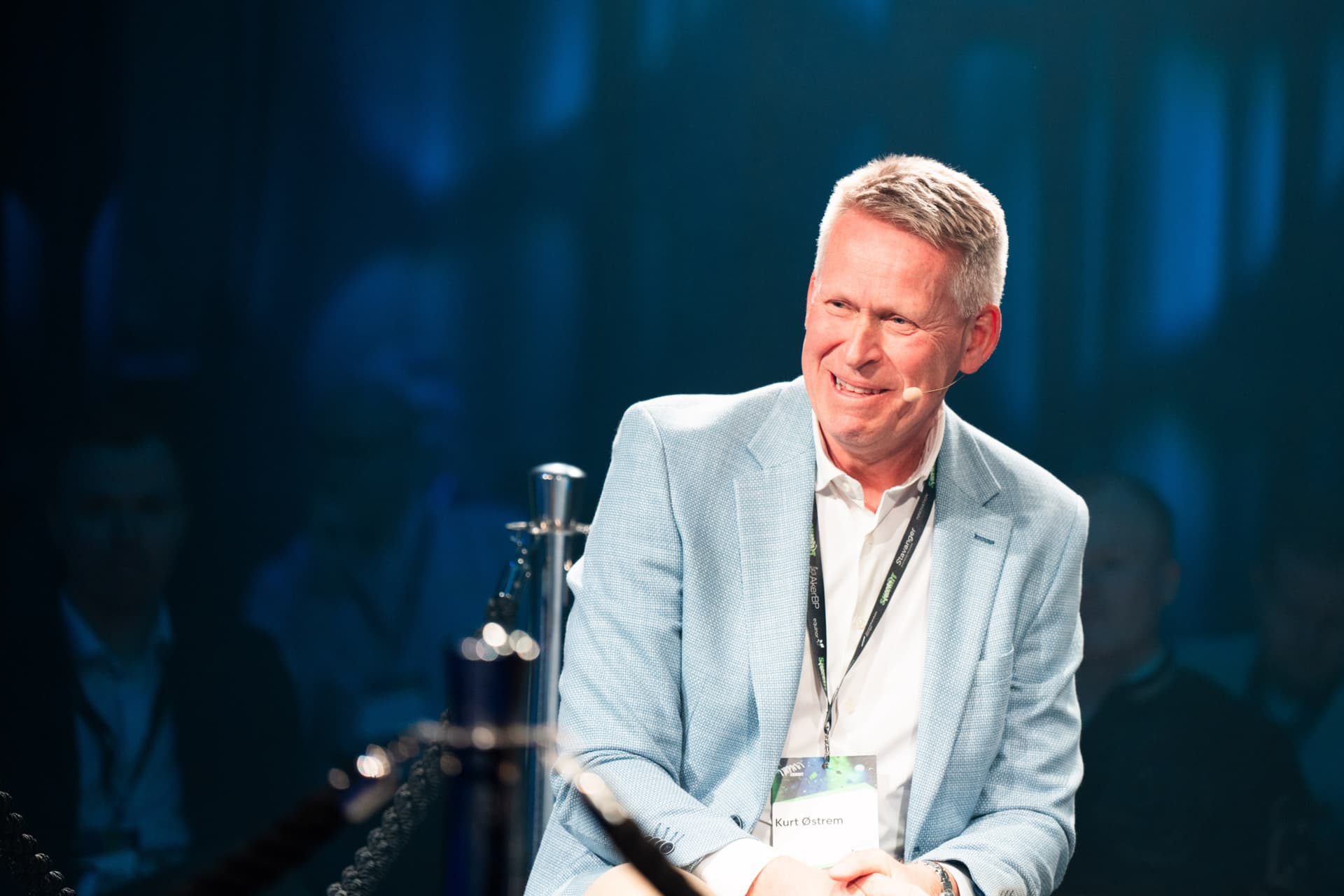
Zaptec CEO Kurt Østrem speaks at the Impact Summit 2026 about the company’s history and its future direction.

Zaptec CEO Kurt Østrem speaking at the Impact Summit in April 2026, sharing the company’s history and how lessons from the past are shaping Zaptec’s future. / Photo by: Ferskvare

Related:

Inside Zaptec

Annual report for 2025

Inside Zaptec

When your EV charger becomes critical infrastructure, the supply chain becomes a geopolitical question

Inside Zaptec

Verified Environmental Product Declarations reinforce Zaptec’s sustainability commitment

Article metadata

Tags:
  • Inside Zaptec
Date:
27.04.26
Read time:
6 minutes
Share:

It didn’t look like this in 2012

In simple terms, a transformer is a device that changes the voltage level of alternating current. Most transformers are big and heavy, moving a lot of power but not very elegantly. Ours was extremely compact and could deliver very high voltage with fine control in a small space.

We started in oil and gas first, which was a natural starting point given our location on Norway’s rugged west coast near the North Sea. 

So, we started with deep-sea drilling

Next, we worked with NASA,

and we explored high‑voltage energy transport, 

and we even found ways to clean water more efficiently using plasma pulses.

On paper, it was visionary. 

In reality, it was a classic drunken walk.


At one point we were more than 40 people, spending money on several parallel ideas, with almost no revenue. In total two local investors, employees, families and friends put around 150 million NOK into Zaptec before we had anything close to a real business.

EV charging first became a thing because Renault reached out to us. They needed help to charge their EV Zoe with the Norwegian grid. Then, this expanded to the idea of "why don't we make a smart EV charger that could charge just any electric vehicle?". So here we are.


This experience, from the early days of Zaptec, still shapes how I think about the company. And it is very relevant for what we are building now.

The one decision that changed everything: focus

Around 2017, we were forced to ask a simple question:

What is closest to an actual product, with actual customers, in an actual market?

The uncomfortable answer was EV charging.

That was not obvious at the time. Investors were still asking whether electric cars would “really win” over hydrogen and other technologies. The easy choice, emotionally, would have been to keep the space projects, the water projects, the “big ideas” alive a bit longer. Not to cut them completely off, but continue the work.

Internally, it was painful. There were strong disagreements between employees, in the board, and among founders. We had invested a lot of identity in those projects.

But the conclusion was clear: if we wanted Zaptec to survive, we had to kill almost everything except EV charging. Focus the people, the capital and the attention on one thing. And then make it work.

Looking back, I think we should have done this much earlier. But that's easy to say ...

Most founders, including us, start out madly in love with their own idea. You see the future so clearly that you believe the job is to convince the market it needs this. It’s a much longer and harder path than starting with what the market actually needs and then building the product to match.

That shift, from “convince the world” to “serve a real need”, is what took us from a drunken walk to a real company.

Today, we are applying the same discipline of focus to something bigger: not the survival of Zaptec, but the role Zaptec will play in Europe’s energy system.

We are not “selling chargers”. We are building infrastructure.

When people look at Zaptec from the outside, they still see boxes on the wall.

It’s understandable. A charger is a physical object. You can touch it. You can install it. You can compare prices and features.

But if we only think of the charger as a “product”, we are missing the point of what it is becoming part of.

Our job now is twofold:

  1. Build the integration layer that lets our products talk safely and intelligently with the energy ecosystem around them.
  2. Build chargers that can act on that connection: charging intelligently, supporting bidirectional energy flows, and responding dynamically to flexibility signals from markets, buildings and the grid.

Both of these are direct consequences of the focus lessons from our early years.

From device to interface

The first part is less visible, but at least as important: how all of these chargers actually connect to everything else.

We now have hundreds of thousands of Zaptec chargers in operation. For our customers and partners, those chargers are not standalone gadgets. They are connection points into a broader energy and software stack:

  • Charge point operators who run public and semi‑public networks
  • Energy companies who want EV charging to be part of their products
  • Building managers and EMS vendors who need to orchestrate common loads, solar and storage
  • Flexibility providers who aggregate capacity and participate in new markets

Again, the early Zaptec story is a good teacher:

You can improvise and be “ad hoc” for a while. But you cannot scale on it.

From charging to flexibility

In the future, energy doesn’t just flow to the vehicle, but also from the vehicle, either back into the building or further, out to the grid.

Why does that matter?

Because the numbers are no longer theoretical. A typical EV battery holds something like one or more daily household energy consumptions. Multiply that across hundreds of thousands of cars, and you are talking about a resource that can actually help keep the lights on, keep costs down and make better use of renewable power.

That is why we have chosen to build the home charger Zaptec Go 2 with the hardware needed for bidirectional communication and accurate import/export metering from day one, even before the ecosystem is fully ready.

For me, this is the same kind of focus decision as in 2017, just at a different level:

We don’t chase every shiny opportunity. We design for the direction we are convinced the system is moving.
From drunken walk to deliberate infrastructure

If I look back at our journey so far, the pattern is simple:

  • We have tried to be everything.
  • We survived because we forced ourselves to focus on one thing.
  • Now that “one thing” has grown into something much bigger: a role in Europe’s energy infrastructure.

The EV charger is no longer a gadget. It is a gateway between your car, your building and the grid.

Our job at Zaptec is to make sure that gateway is:

  • built on real, field‑tested hardware prepared for flexibility and V2G
  • connected through a robust, secure integration layer that others can rely on
  • shaped by standards and user needs

We learned the hard way what happens when you try to do too much at once. The next part of our story is about doing fewer things, better, at a much larger scale.

That is how we intend to earn our place in Europe’s energy system.

Join Club Zaptec

We learned the hard way to focus on what really matters. In Club Zaptec, we share how that focus is shaping the future of EV charging and energy flexibility.

Be part of Club ZaptecBe part of Club Zaptec