• Charging solutions
    • Home charging
      • Zaptec Go
      • Zaptec Go 2
    • Commercial & shared charging
      • Zaptec Pro
    • Load balancing
    • Zaptec App
    • Zaptec Portal
    • Accessories
  • For partners & installers
    • Documents & manuals
    • Partner webshop
    • Partner marketing material
    • Existing partners & installers
    • Training courses
    • Become a partner
    • Integrations with Zaptec
  • Info Hub
    • Tips and tricks
    • Case studies
    • Industry news
    • Inside Zaptec
  • Need help?
    • Documents & manuals
    • Help Centre
    • Contact us
  • Company
    • About us
    • Our journey
    • Quality and safety
    • Sustainability commitments
    • Investor relations
    • Careers
    • The Zaptec Index
  • Find an installer
  • Become a partner
Get ZaptecGet Zaptec

Explore our solutions

Charging solutionsCharging solutions
Zaptec portalInvestor RelationsSecurityDocuments & manualsPressPrivacy PolicyDevelopersCookie PolicyTerms of UseSupport
FacebookInstagramLinkedInTikTokYouTube
  1. Home /
  2. Info Hub /
  3. Case studies /
  4. How a Lisbon shopping centre built EV charging for 1,000 EVs, without rebuilding its electrical grid

How a Lisbon shopping centre built EV charging for 1,000 EVs, without rebuilding its electrical grid

When Amoreiras Shopping Centre first started dealing with electric vehicles, EV charging was still relatively new in Portugal. The initial solution was simple: ordinary electrical sockets in the car park. 

But as more EV owners began asking to charge their cars, it became clear that a solution designed for everyday electric appliances was not going to be enough. 

“The first time we encountered electric cars, we used ordinary sockets in the parking facility”, says Rui Albuquerque, who manages the private car park at Amoreiras Shopping Center in Lisbon. “But we quickly realised that neither the infrastructure was properly prepared for an installation of this kind, nor did we have enough available power for the number of requests for electric vehicle charging that we began to receive.” 

At the annual condominium association meeting, the owners decided to develop a shared charging infrastructure for the entire car park. The aim was to have the electrical structure in place so that anyone who wanted a charger could connect to it. 

Related:

Case studies

Charging a national electric fleet: infrastructure designed to scale

Case studies

A new generation of electricians are investing in Zaptec

Case studies

How Mattias Nilsson went from electric car critic to solar charging guru at Europe’s leading AC charging company

Article metadata

Tags:
  • Case studies
Date:
13.10.26
Read time:
5 minutes
Share:

The challenge

Powering hundreds of spaces without wiring each one individually  

Amoreiras is not a typical car park. The development includes four towers, around 3,000 people working in its offices, private residents and a large shopping centre with around 1 000 parking spaces spread across two parking levels.  

That created a straightforward but difficult electrical problem. How do you make charging available across hundreds of parking spaces without running a separate cable to every charger? 

“It is enormous,” says Pieter Ijzerman, owner of ChaZeMo, a Lisbon-based company working with EV charging. “The challenge was, and to a large extent still is, to charge approximately 1,000 cars at the same time, all connected to the same charging installation.” 

There was also more to consider than the physical installation. The car park is used by private residents and companies, with different requirements for how they access and pay for charging. The electricity comes from one supplier, while the cost needs to be allocated to the individual users. 

And the system needed to account for what would happen as electric vehicles became more common. 

“Car technology and battery technology are evolving,” says Pieter. “We clearly understood from Amoreiras and its board that they wanted a solution that could evolve in the future while solving the immediate problem they had in 2019.” 

The solution

A charging infrastructure designed to grow with demand 

Amoreiras spent around a year looking for a technical partner before selecting Zaptec's solution. 

For Rui, the flat-cable system was an important part of the decision. Instead of running individual cables from a fuse box to every charger, the system divides the car park into circuits, each covering approximately 50 to 60 parking spaces, with 8 circuits per level. 

For a car park with hundreds of spaces, this makes the installation much simpler. 

“The most important differentiating feature of the Zaptec Pro installations is that it dynamically balances the phases of the electrical cable,” Pieter explains. 

“With a classic installation, you would have to pass a cable from a fuse box to each charger. That's difficult when you have 500 parking spaces and want to provide them all with chargers.” 

Once installed, the infrastructure allowed residents and companies to add chargers as needed, without requiring a new electrical project for each installation. 

In-depth

Adding chargers without rebuilding the infrastructure 

One of the reasons the system was designed this way was to separate the main electrical installation from the individual charger installations. 

" After the pre-installation is done, each person or company can buy a charger through a very simple process," says Pieter. "We send a team, and within an hour, the charger is installed, they get an RFID card, and they start charging the same day."  

The team calculated the installation would need a 630 kW transformer, designed to support approximately 500 to 600 cars charging at once, enough for each car to gain at least 50 km of range after 8 to 10 hours. In practice, since cars arrive and leave at different times, the amount of energy delivered per car has been considerably higher than this baseline target, even during peak demand. 

That approach also had to accommodate Amoreiras' mix of users. "At Amoreiras, we essentially have all of these different requirements in one place," Pieter says. "From the beginning of the discussions, we had to find a solution that would respond to the needs of small businesses, larger businesses, and private individuals." 

In other words: build the infrastructure once, then add charging points as adoption grows. 

A system that works in everyday use

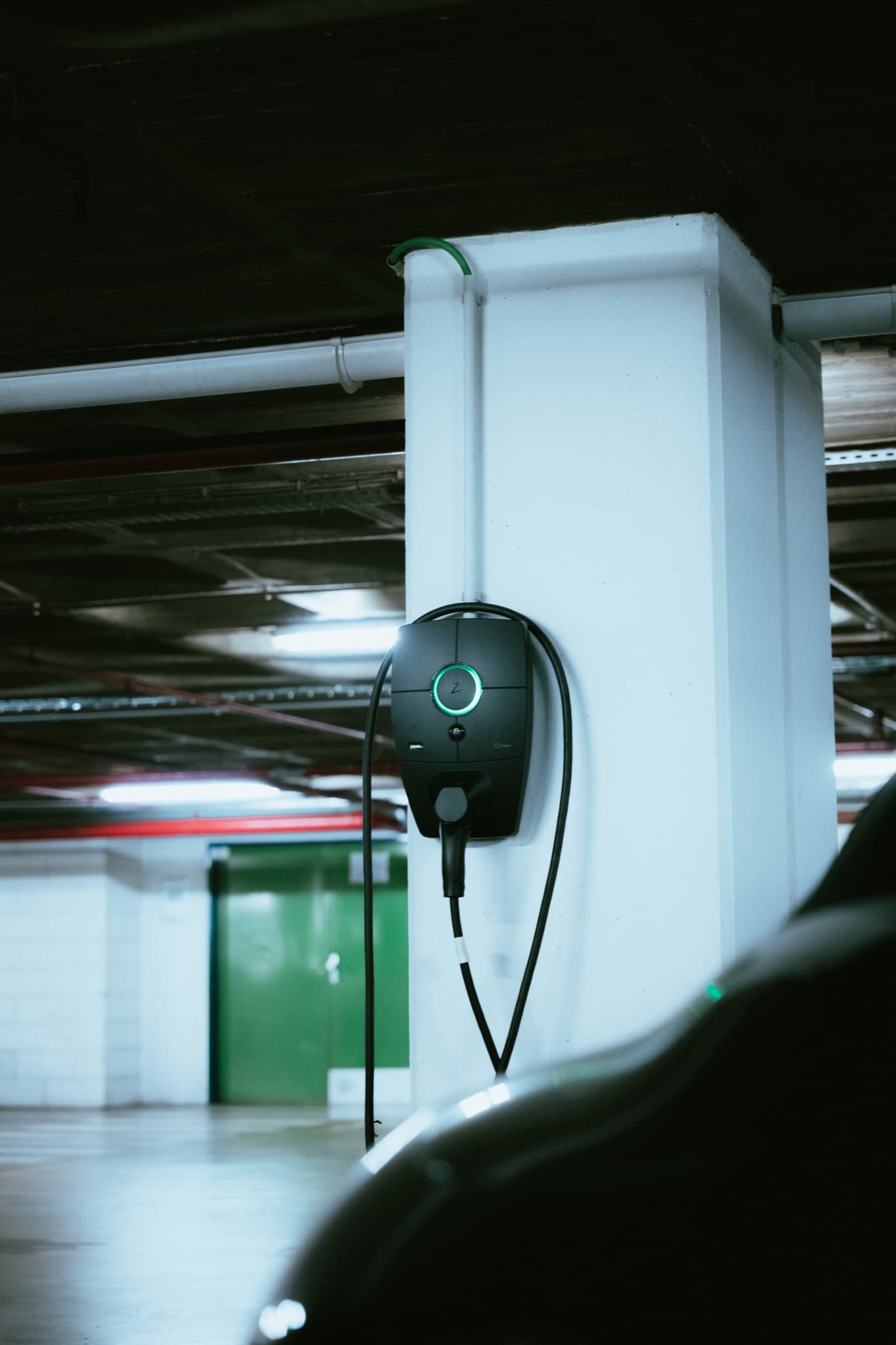
Today, the car park has more than 160 chargers installed and serves a mix of fully electric cars and plug-in hybrids. 

For Rui, the clearest sign that the system is working is not a technical specification. It is the lack of complaints from the people using it. 

“I often say that the greatest compliment I can receive is that people do not complain about anything”, he says. “Nobody says, ‘I have a car and it does not charge.’ That situation has never happened to us.” 

He says users have not questioned whether their cars can charge, whether they are receiving too little power, or whether they are unable to charge.  

The result: 160+ chargers and no complaints

More than 160 chargers are now operating across the car park, while the underlying infrastructure remains ready to accommodate further growth. What started with ordinary electrical sockets has become a shared charging infrastructure designed to support hundreds of users today and scale with EV adoption over time. 

“I am satisfied because what they asked for was a good solution and a solution for the future,” says Rui. “That is what I feel this solution provides.”